Delegate, Distance, or Ditch
DELEGATE, DISTANCE, OR DITCH: A BETTER WAY TO LIGHTEN THE LOAD
You may not need a better system for doing everything.
Highly capable women are very good at finding better ways to manage impossible amounts of responsibility.
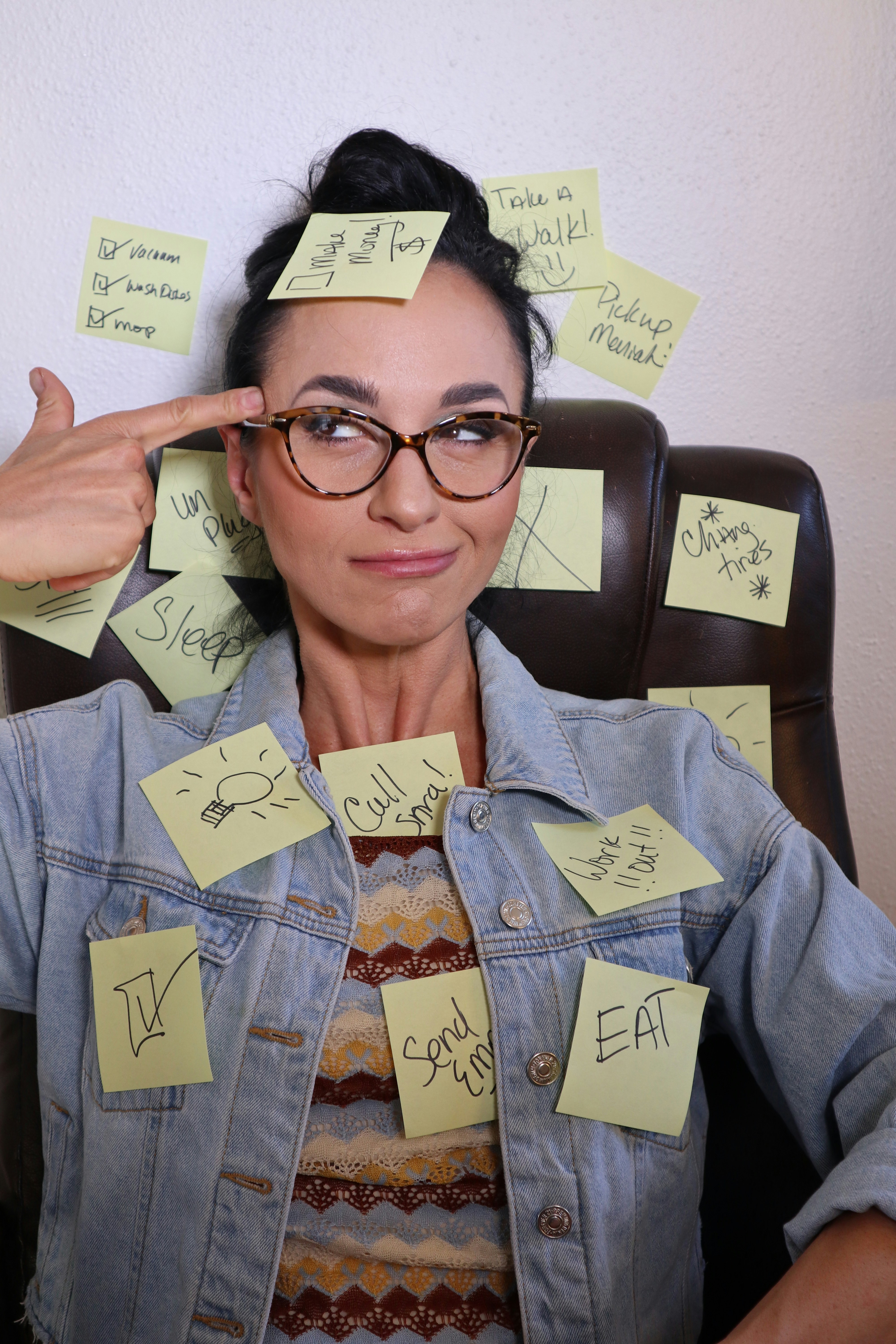
We buy the planner. Make the list. Color-code the calendar. Wake up earlier. Stay up later. Batch the errands. Optimize the routine. Read another article about productivity and try to squeeze a little more efficiency out of a life that is already overflowing.
Sometimes a better system helps.
But sometimes you do not need a better way to carry everything. You need to stop carrying everything.
That is a very different assignment.
When you have spent years being the person who notices, remembers, fixes, and follows through, releasing responsibility can feel much harder than completing the task.
Doing it yourself offers immediate relief from uncertainty. You know it will be done. You know how it will be done. You do not have to explain, wait, trust, or tolerate someone else’s learning curve.
So you tell yourself, “It is faster and easier if I just do it.”
In that moment, it probably is.
But when you repeat that sentence for years, you make a long-term commitment to every short-term task. You also deny other people the chance to develop competence and ownership.
If you are ready to create some room in your life, I want to give you one of the simplest tools I have used with clients throughout my years of coaching: delegate, distance, or ditch.
BEGIN WITH THE MOMENT RESENTMENT SHOWS UP
You do not have to audit your entire life in one afternoon. In fact, please do not turn lightening your load into one more giant project you have to execute perfectly.
Start with awareness.
The next time you feel that familiar surge of resentment—“Why am I the one doing this again?”—stop for a moment. Breathe before you power through. Ask yourself why this particular responsibility feels so heavy.
Then ask: Can I delegate it, distance it, or ditch it?
You do not have to act immediately. At first, the win is simply interrupting your automatic assumption that the task belongs to you and must be completed exactly as you have always completed it.
DELEGATE: LET SOMEONE ELSE OWN IT
Delegating means transferring a responsibility to someone else who is capable of doing it.
That sounds obvious, but for perfectionists and control lovers, it can be terrifying. Delegation requires us to tolerate the possibility that another person will approach the task differently. We may have to invest time up front to explain it. We may have to answer questions. We may have to watch someone become competent instead of expecting instant mastery.
Rachel shared a useful way to think about this in our podcast conversation: the upfront work of teaching is a long-term investment.
Yes, it may be faster to do the task yourself today. But if you teach someone today, that responsibility may no longer belong to you next week, next month, or next year.
She also shared the 70% rule: if someone can do the task at least 70% as well as you can, delegate it.
I can hear my fellow “my way or the highway” friends objecting already.
Seventy percent can feel deeply uncomfortable when your personal standard is 100%. But before rejecting it, ask a few questions.
Does this task truly require perfection?
Is your preferred method the only correct method, or simply the method you prefer?
What is the actual consequence if the result is good enough instead of exactly yours?
Rachel used the example of doing dishes. She had historically cooked dinner and cleaned the kitchen every night. When her husband offered to take over the dishes, her first response was anxiety: he would not do them the way she wanted.
Then she asked whether he could meet 70% of her expectations. The answer was clearly yes, so she let him do it.
At first she hovered. Eventually, the discomfort passed. Her husband now does the dishes, and the responsibility no longer drains her bandwidth every evening.
Delegation is not tossing a task at someone with no information and then criticizing the result. Give clear expectations, provide what they need, and allow them to take ownership.
If you delegate but continue controlling every detail, you have not released the responsibility. You have only added supervision to your workload.
DISTANCE: DECIDE IT DOESN’T HAVE TO HAPPEN NOW
Some tasks cannot be delegated, but they can be delayed.
When you are highly responsible, everything can feel urgent. The email needs an immediate response. The kitchen needs to be cleaned before bed. The problem needs to be solved the moment you notice it. The request from someone else automatically moves to the top of your list.
But if everything is important, nothing is.
Distance asks whether the task truly needs your attention right now.
Could the dishes wait until morning?
Could you answer the message during business hours?
Could the decision sit for a day while you gather more information?
Could someone else’s request fit into your schedule instead of replacing it?
Creating distance is not procrastination when the timing is intentional. It is refusing to let every task manufacture its own emergency.
For those of us whose nervous systems became accustomed to survival mode, urgency can feel strangely normal. We may rush not because the situation demands it, but because immediate action gives us a sense of control.
Putting distance between ourselves and a task gives us an opportunity to choose rather than react.
DITCH: QUESTION WHETHER IT NEEDS TO BE DONE AT ALL
This may be the most liberating category.
How many things do we keep doing simply because that is how we have always done them?
There is an old story about a woman who cut the end off a roast every time she cooked it. When someone asked why, she said that was how her mother had taught her.
She asked her mother, who said she had learned it from her own mother. When they finally asked Grandma, she explained that her roasting pan had been too small, so she cut the end off to make the roast fit.
Two generations kept repeating a step required by a pan that no longer existed.
We all have our own version of the missing pan. Traditions, household standards, meeting routines, reporting processes, social obligations, and personal rules can continue long after the reason for them has disappeared.
My family discovered this during our early Christmas celebrations. We would prepare a beautiful meal with the fancy dishes, then the men visited, the children played, and the women spent the evening cleaning the kitchen.
We hated it, but we did it for years because that was how the celebration worked.
Then someone jokingly suggested paper plates.
We stopped and thought, “Wait a minute. We can do that?”
We bought sturdy disposable plates and nicer disposable silverware, served the meal buffet-style, and had everyone clear their own things.
The kitchen was finished in minutes. We got to eat pie, open gifts, and enjoy the people we had gathered to see.
Nothing meaningful was lost. We ditched the part that kept us from the point of the celebration.
GIVE YOURSELF A SERIOUS CASE OF GOOD ENOUGH
Sometimes you do not need to ditch the entire task. You need to ditch the standard attached to it.
I have ADHD, and my brain functions better when my environment is clean and organized. Clutter creates noise for me. But there are seasons when I do not have the time or energy for deep cleaning.
That is when I give myself what I call a serious case of good enough.
I am not scrubbing every surface or searching for dust. I clear the counters, put things away, and create enough visible order for my brain to settle.
The room is not perfect. It works.
Good enough is not laziness. It is discernment. It allows the level of effort to match the actual importance of the task.
This week, notice the responsibilities that create resentment or consume more mental energy than they deserve. Do not judge yourself, and do not demand an immediate overhaul.
Just ask:
Can I delegate this?
Can I put some distance between myself and it?
Can I ditch the task—or the impossible standard I attached to it?
You may be surprised by how many things you are doing because an earlier version of you needed to do them, because someone once praised you for doing them, or because you never stopped to ask why.
You do not need to earn your rest by completing everything. You do not need to protect your value by remaining indispensable. And you do not need to perform every responsibility at 100% to be a responsible person.
Sometimes building a life that feels like yours begins by setting down what was never required in the first place.